Innovation is a key strategic lever for business growth and internationalisation. The evolution of emerging technologies – and especially artificial intelligence – is profoundly changing the way companies analyse markets, develop products, and build increasingly dynamic, data-driven business models.
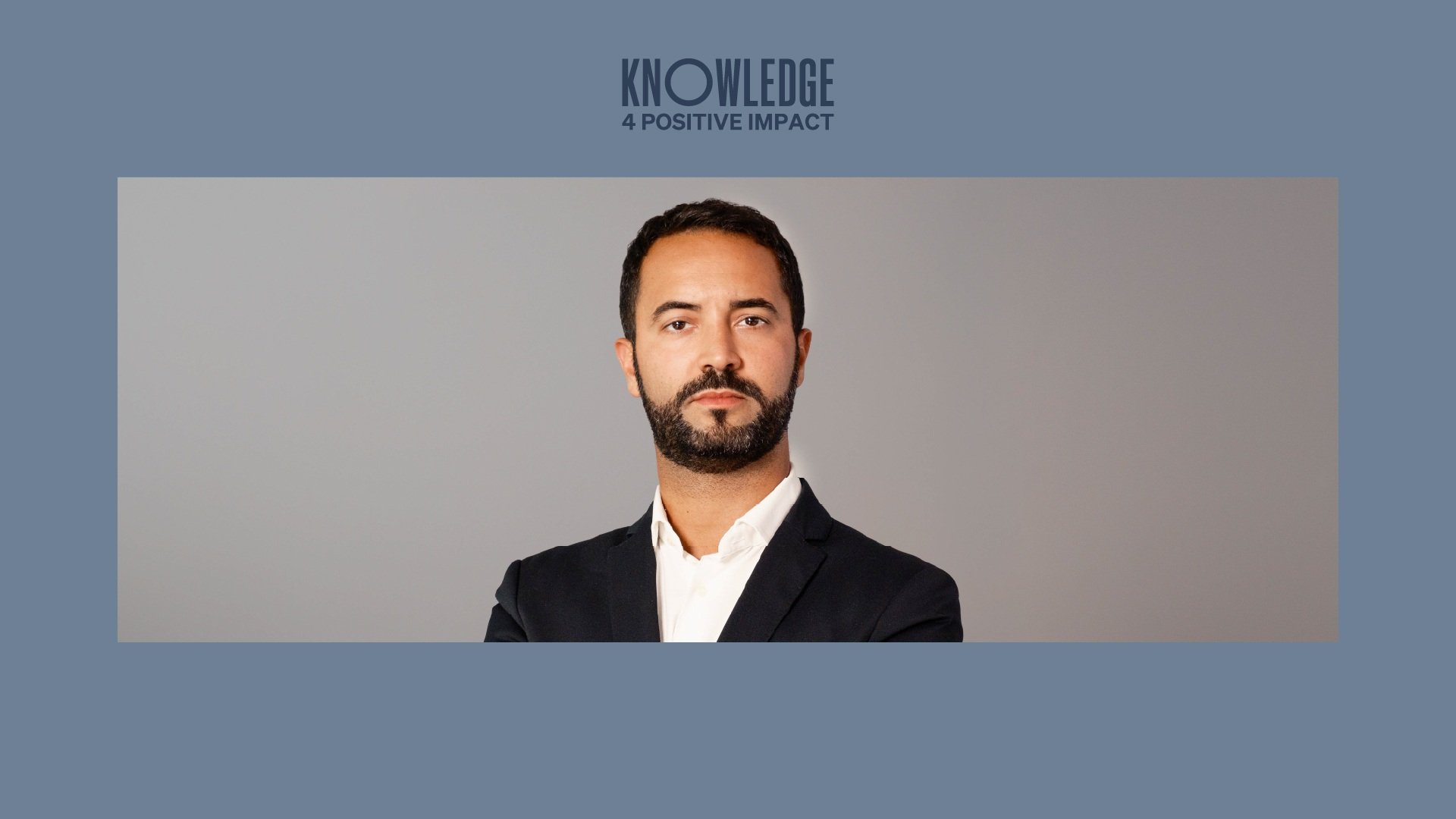
In this scenario, innovation means, above all, developing the capacity for continuous learning, experimentation and strategic adaptation. This is explained in this interview with Angelo Cavallo, professor and director of the International Master in Innovation and Entrepreneurship at POLIMI Graduate School of Management, with whom we discussed the role of emerging technologies, the challenges for business, and the skills needed to drive transformation by focusing on a key theme: the rediscovery of theory.
How do innovation and the use of AI solutions support the growth and internationalisation of businesses today? What are the most relevant trends and how do they impact business models?
Artificial intelligence has now become an extremely powerful tool, especially in testing and learning processes. We’re talking about learning about the product, the market and, above all, about the intersection between these two elements, which is exactly where business models are defined and evolved. AI enables these processes to be more informed and structured: corporate decisions are increasingly based on data, validation of assumptions, and an experimental and (quasi) scientific approach.
The subject of learning has in fact long been central to studies on corporate growth. As early as the 1950s, Edith Penrose was talking about so-called economies of growth, which can ultimately be interpreted as true economies of learning. For Penrose, the limits to business growth lie not so much in markets or financial resources, but in the managerial capacity to learn and develop the business. In this sense, artificial intelligence fits perfectly into this logic as an extraordinary accelerator of strategic and organisational learning processes.
Using technologies such as AI enables companies to develop a deeper understanding of their business and, as a result, to overcome some traditional barriers to growth. At the same time, however, this brings new competitive challenges. Today, information and training travel at a very high speed, and this means that companies’ ability to develop innovative business models is increasing rapidly. But the same applies to competitors. Consequently, companies must be increasingly ready to question their value offerings, because learning processes are not just about the individual organisation, but about the entire competitive ecosystem.
Which sectors are showing the greatest maturity in the adoption of innovative solutions to support business, and where does Italy currently stand compared to the main international markets?
That is not an easy question, because the spread of innovation – and artificial intelligence in particular – is happening so fast that it is difficult to determine precisely which sectors are really ahead and which are behind. AI is pervading virtually every sector, and the speed of its diffusion is such that the differences are at risk of diminishing very rapidly.
Of course, some structural characteristics of the industries remain. It is clear that sectors such as agriculture, for example, tend to have slower adoption rates than areas such as finance.
If we look at the Italian case, it’s important to consider the structure of our business landscape, which is strongly characterised by the presence of small and medium-sized enterprises. In this context, artificial intelligence presents one particularly interesting aspect: to some extent, it can be considered to be a relatively democratic technology. Access to technological tools isn’t necessarily prohibitively expensive. The real barrier for smaller businesses is often of a strategic nature: the ability to devote time and resources to reflecting on the future of the company, on long-term horizons, and on how and whether to grow.
Many businesses legitimately choose to stay within their own boundaries, while others have ambitions to expand. For the latter, artificial intelligence represents a great opportunity, precisely because it reduces some of the technological challenges that once could have been much harder for smaller organisations to overcome.
In order to best manage this transformation, what skills are now essential for managers and entrepreneurs?
One of the most important skills today is what we might call ‘unlearning’. This means being able to set aside cognitive patterns, mental models, or even success stories that have worked very well in the past but that, in a rapidly changing context, may no longer be effective. The world moves at such a speed that what worked six months ago may no longer work today. Think, for example, of many consulting firms, where the value offering is continuously updated and in increasingly shorter timeframes.
This also means a transformation in the way we think about the role of people in organisations. More and more often, they are not only asked to perform a task, but to contribute with their thinking, interpretation and creativity. Execution, in many cases, will be increasingly engineered and supported by artificial intelligence; what will remain central will be the human capacity to imagine, guide, and steer these technologies towards truly innovative, market-relevant solutions.
What is the approach to developing these skills at POLIMI Graduate School of Management and, in particular, within the International Master in Innovation and Entrepreneurship of which you are the director?
At POLIMI Graduate School of Management, this scenario represents a very interesting educational challenge. Today, information and knowledge are extremely accessible and travel very quickly, and, as a result, students entering the classroom often start from a high level of preparation. This fundamentally changes the role of the instructor, whose task is not only to convey information, but increasingly to stimulate, inspire and accompany participants on active learning paths.
In educational programmes, and in particular in our International Master in Innovation and Entrepreneurship, this translates into an approach that values workshops, coaching sessions, and collaborative learning dynamics. The teacher increasingly becomes a facilitator, a moderator capable of orchestrating the contribution of the entire class. In fact, even the youngest students often bring experiences, perspectives and insights that can enrich other participants’ learning.
In all our courses, we also focus on a topic that is now central to the debate on innovation: the need to return to the value of theory. In the age of artificial intelligence, talking about theory shouldn’t be seen as something distant from practice. On the contrary, theory is the starting point for interpreting reality and guiding decisions. Throughout my research and also in interviews with numerous entrepreneurs and managers, I’ve observed how all great leaders are guided by their own theory, sometimes explicit, sometimes implicit, that instructs their strategic choices.
This concept is also at the heart of “Engineering Growth”, a book co-authored with Federico Frattini, Dean of POLIMI Graduate School of Management, and Tommaso Canonici, Founding Partner & Managing Director of Opinno: every manager starts with intuition, but today it would be short-sighted to limit ourselves to intuition when we have a huge amount of data and analytics at our disposal. The challenge is not to choose between theory and practice, but to find harmony between these two elements. Theory offers the vision and the ability to imagine the new; practice allows that vision to be turned into reality. It is this balance of strategic thinking and execution that, today more than ever, enables businesses to innovate and grow sustainably over time.