




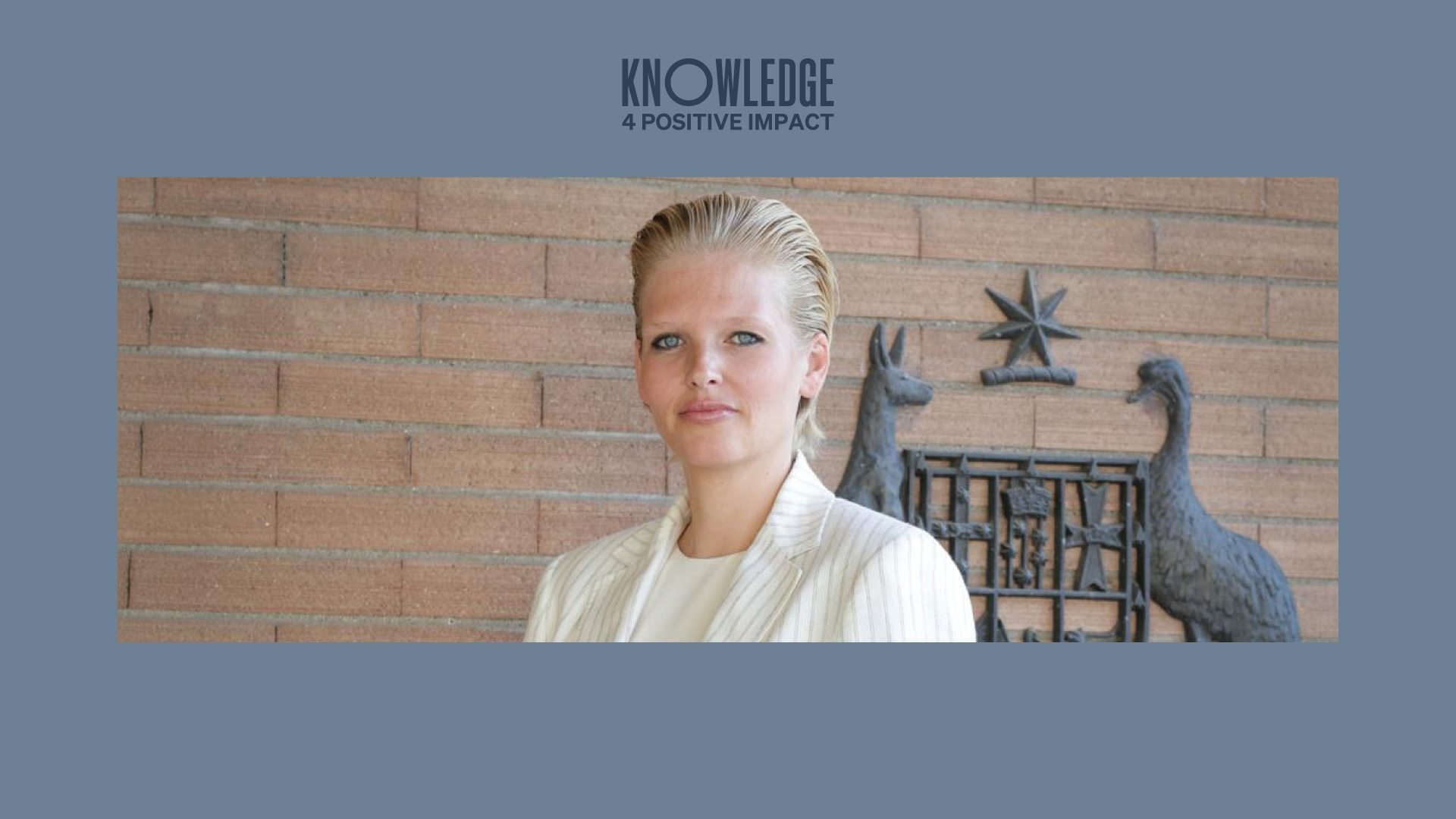
By Taylee Lewis, Co-Founder & President, Australia Italy Business Association (AIBA)
In an era defined by uncertainty and transformation — from digital disruption to demographic and geopolitical shifts — no single sector can address global challenges alone. The pace of progress and the complexity of today’s problems demand a new kind of collaboration: one that unites academia, industry, and government with purpose, agility, and shared accountability.
From Knowledge to Impact
Today’s most impactful breakthroughs — from renewable energy systems to AI-driven healthcare and sustainable design — emerge from ecosystems where researchers, entrepreneurs, and policymakers work side by side. These environments accelerate the translation of ideas into real-world solutions while equipping talent with the cross-disciplinary skills that modern economies demand.
Within these ecosystems, business associations play a pivotal role. They serve as conveners and advocates for deeper collaboration. By providing trusted platforms for alignment, co-design, and policy dialogue, they help transform shared ambitions into actionable initiatives. As collective voices of industry, associations also shape policy frameworks that reward long-term investment in innovation and skills, ensuring public research and private enterprise advance in tandem toward societal goals. Their convening power builds the connective tissue of innovation ecosystems — the networks, norms, and narratives that sustain systemic impact over time.
The partnership between the Australia–Italy Business Association (AIBA) and POLIMI Graduate School of Management exemplifies this commitment — a shared dedication to strengthening the ecosystem that connects academia, industry, and policy. It signals our belief that meaningful and lasting impact arises when institutions not only collaborate, but actively contribute to shaping a better, more resilient society.
Driving Change Across Systems and Economies
Collaboration at this level is not just about innovation — it’s about systemic change. Whether the challenge is decarbonising industries, digitising public services, or rethinking urban mobility, progress requires aligning technology, policy, and human capital.
From an Australian perspective — a nation seeking the talent and leadership to drive its economic transition — business schools like POLIMI Graduate School of Management have the capacity to sit at the centre of this transformation. They are uniquely positioned to cultivate a generation of leaders who combine technical excellence with the values, vision, and social responsibility needed to shape a more sustainable and inclusive future.
From Collaboration to Co-Creation
The next frontier lies in moving from collaboration to co-creation — where academia and industry jointly define problems, pool resources, and share outcomes. This requires mutual trust, adaptive governance, and a shared vision for long-term societal impact. If we can bridge these worlds more effectively, we will not only accelerate innovation but help shape economies that are more inclusive, sustainable, and future-ready.